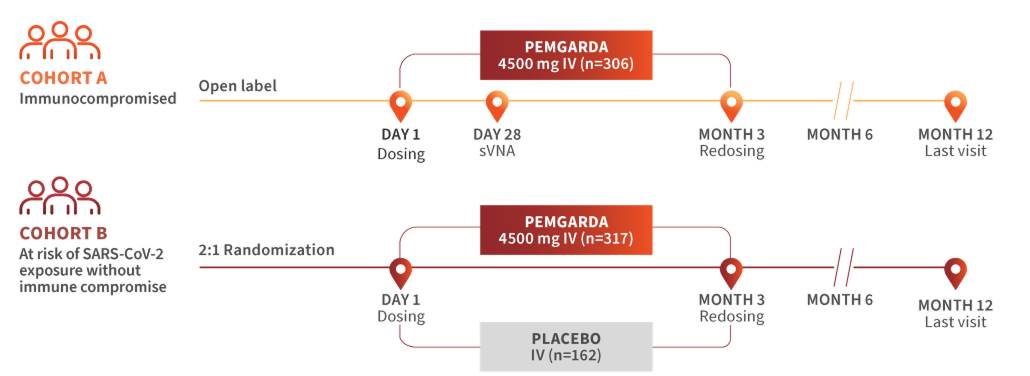
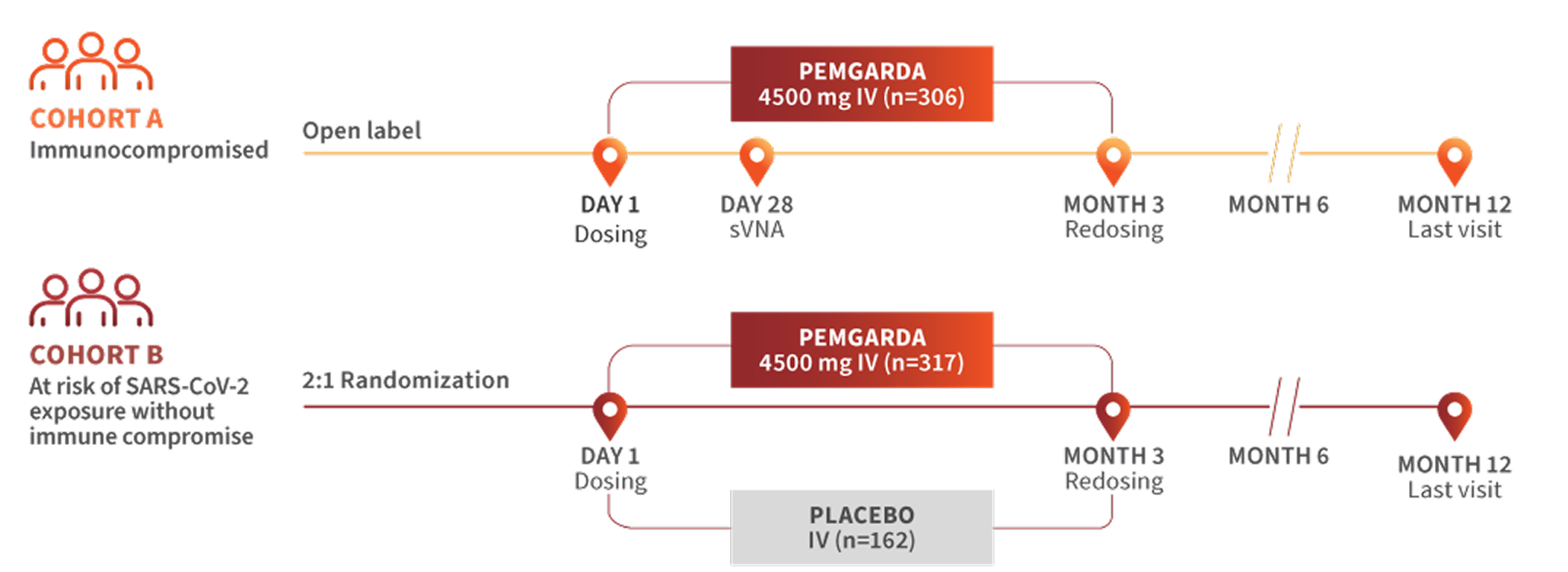
CANOPY trial design1,2
The CANOPY Phase 3 clinical trial studied the efficacy and safety of a single dose of PEMGARDA® 4500 mg for the pre-exposure prophylaxis of COVID-19 in adults ≥18 years of age in 2 cohorts.1
All participants in Cohort A had underlying moderate-to-severe immune compromise.1
 Tap
to enlarge Cohort information
Tap
to enlarge Cohort information


- Adults aged ≥18 years weighing ≥40 kg at time of screening
- Tests negative for current SARS-CoV-2 infection by local antigen test or RT-PCR at time of screening
- For Cohort A: Has significant immune compromise from causes including solid tumor or hematologic malignancies, CAR-T-cell therapy or HSCT, primary immunodeficiency, advanced HIV infection, or receiving qualifying immunosuppressive therapies
- For Cohort B: Is at risk of acquiring SARS-CoV-2 due to regular unmasked face-to-face interactions in indoor settings
- Defers receipt of any COVID-19 vaccination/booster for ≥28 days after dosing on Day 1
- Note: Unless specified by Cohort, the criteria applied to both Cohorts
- For Cohort B: Prior receipt of a COVID-19 vaccine or booster within 120 days before randomization
- Prior receipt of convalescent plasma or a mAb to SARS-CoV-2 active against currently circulating variants, including in the setting of a clinical trial, within 120 days before randomization
- Prior known or suspected SARS-CoV-2 infection within 120 days before randomization
- Exposure to someone with known or suspected SARS-CoV-2 infection in the 5 days before randomization
- Is acutely ill or has any symptoms suggestive of infection, in the opinion of the investigator
CANOPY trial objectives
(moderate-to-severe immune compromise)1
COHORT A primary efficacy objective: Evaluate protection against symptomatic COVID-19 based on calculated titers against SARS-CoV-2 following PEMGARDA administration by immunobridging to historical data from the EVADE study, which provided evidence of clinical efficacy of adintrevimab, the parent mAb of PEMGARDA.
COHORT A exploratory objective: Collect data on RT-PCR–confirmed COVID-19, COVID-19–related hospitalizations, or all-cause death in participants who received a full initial dose of study drug.
(without moderate-to-severe immune compromise)1
COHORT B exploratory efficacy objective: Evaluate clinical efficacy of PEMGARDA compared to placebo in the prevention of RT-PCR–confirmed COVID-19 in randomized participants without SARS-CoV-2 infection at baseline and without moderate-to-severe immune compromise.
Cohort A patient characteristics
as moderately to severely immunocompromised1


Stay up to date on PEMGARDA
Stay current with the latest news about PEMGARDA or connect with a PEMGARDA Representative today.
Connect with us